Showing posts with label Slovenia. Show all posts

Sunday, August 16, 2020

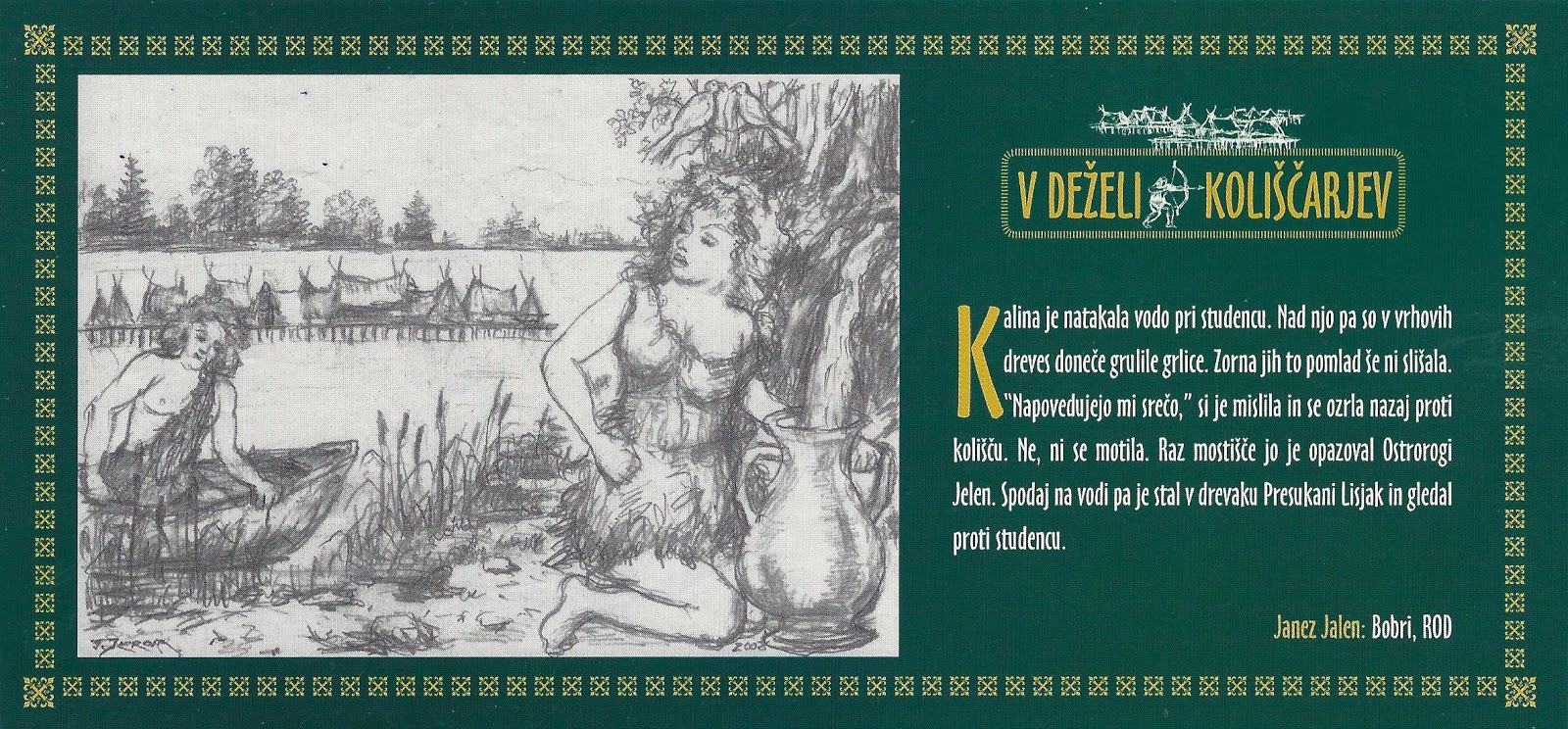
In the land of pile-dwellers | Slovenia


Postcard
Prehistoric pile dwellings around the Alps is a series of 111 prehistoric pile-dwellings (or stilt house) in and around the Alps. Built from around 5000 to 500 B.C. on the edges of lakes, rivers or wetlands. None of the original dwellings remained intact from this prehistoric time in Alpine Europe.

Prehistoric Pile Dwellings around the Alps is a Unesco World Heritage site. It is a transboundary site for Austria, France, Germany, Italy, Slovenia and Switzerland.

Sunday, April 21, 2019

Gewerkenegg Castle | Slovenia


Postcard
The old town of Idrija, Slovenia is dominated by the Gewerkenegg Castle (mine castle in German). The Gewerkenegg Castle was built in the first half of the 16th century as the administrative building of the Idrija Mercury Mine – the second largest mercury mine in the world.

Since 1954 it has been the seat of the Municipal Museum Idrija. The entire complex is now a museum exhibition area and the inner courtyard a venue for many summer cultural events in Idrija.

Heritage of Mercury. Almadén and Idrija is a UNESCO World Heritage site.  Idrija – Old Town is one of the component parts of this site. Here you see another postcard about this site.

Thursday, December 20, 2018

Indrija mercury mine | Slovenia


Postcard
Idrija is a town in western Slovenia, known for its mercury mine, the second largest in the world.

Together with the mining sites of Almadén in Spain it comprises UNESCO World Heritage site Heritage of Mercury. Almadén and Idrija.

Saturday, December 2, 2017

Škocjan Caves Regional Park | Slovenia


Postcard
Škocjan Caves Regional Park is situated in the Kras Plateau of South-West Slovenia. The caves have a highly multi-branched system of cave passages totalling 6.2 kilometres in length, the lowest point being 223 metres deep.

It is one of the world's largest known underground river canyons, cut into the limestone bedrock by the Reka River.


Škocjan Caves is a UNESCO World Heritage site.

Sunday, November 24, 2013

Postojna Cave, 21 km of Stalactite Paradise


Postcard
This is the second postcard that Igor sent me, picturing Postojna Cave in Slovenia.

“Stalactite paradise on every corner
21 km of passages, galleries and magnificent halls offer a unique experience of the underground world. The Postojna cave is definitely one of the most diverse cave systems in the world.”


Stamp
Posta Slovenije issued a joint commemorative block with Austria entitled “Postojna cave, cave post office 1899″. On 15 August 1899, 500 meters from the entrance to the cave, the first underground post office in the world was opened. 

The Salamander-like creature on the cancellation is an Olm. It lives in caves like Postojna Cave.

140 Years of Postojna Cave Railway


Postcard
Postojna Cave is a 20km long karst cave system near Postojna, Slovenia. It is one of the major tourist attractions in Slovenia, welcoming half a million visitors each year. Visitors are taken for a tour by a special cave train launched on 16 June 1872, celebrating its 140 years anniversary in 2012.

Igor was so kind to contact me and send me two Postojna Cave postcards. Thx Igor!

Stamp
A matching stamp. On 15 August 1899 the first underground post office in the world was opened in Postojna Cave. 

Saturday, June 22, 2013

Bled Island – Slovenia’s Fairy Tale Isle


Postcard
Bled is a town in Slovenia, on the east side of Lake Bled. The town features a small island in the middle of  an emerald green mountain lake. The only real island in the virtually land-locked country.

The island is tiny but over the centuries people have wasted no time using virtually every square meter to one purpose or another. The island is home to the Assumption of Mary Pilgrimage Church, built in the 15th century and known by its visitors because of the 99 steps that lead up to the church. Traditionally, local grooms carry their brides up these steps while the bride remains perfectly silent, in order to bring them happiness in the future.

Stamp

Sunday, September 11, 2011

A dragon from Ljubljana


Postcard
The dragon has long been a symbol of Ljubljana. The origin of this city's symbol can be traced to the myth of Jason and the Argonauts, who supposedly encountered the Ljubljana dragon on their way to the Adriatic Sea by way of the Danube and Ljubljanica Rivers.


Stamp
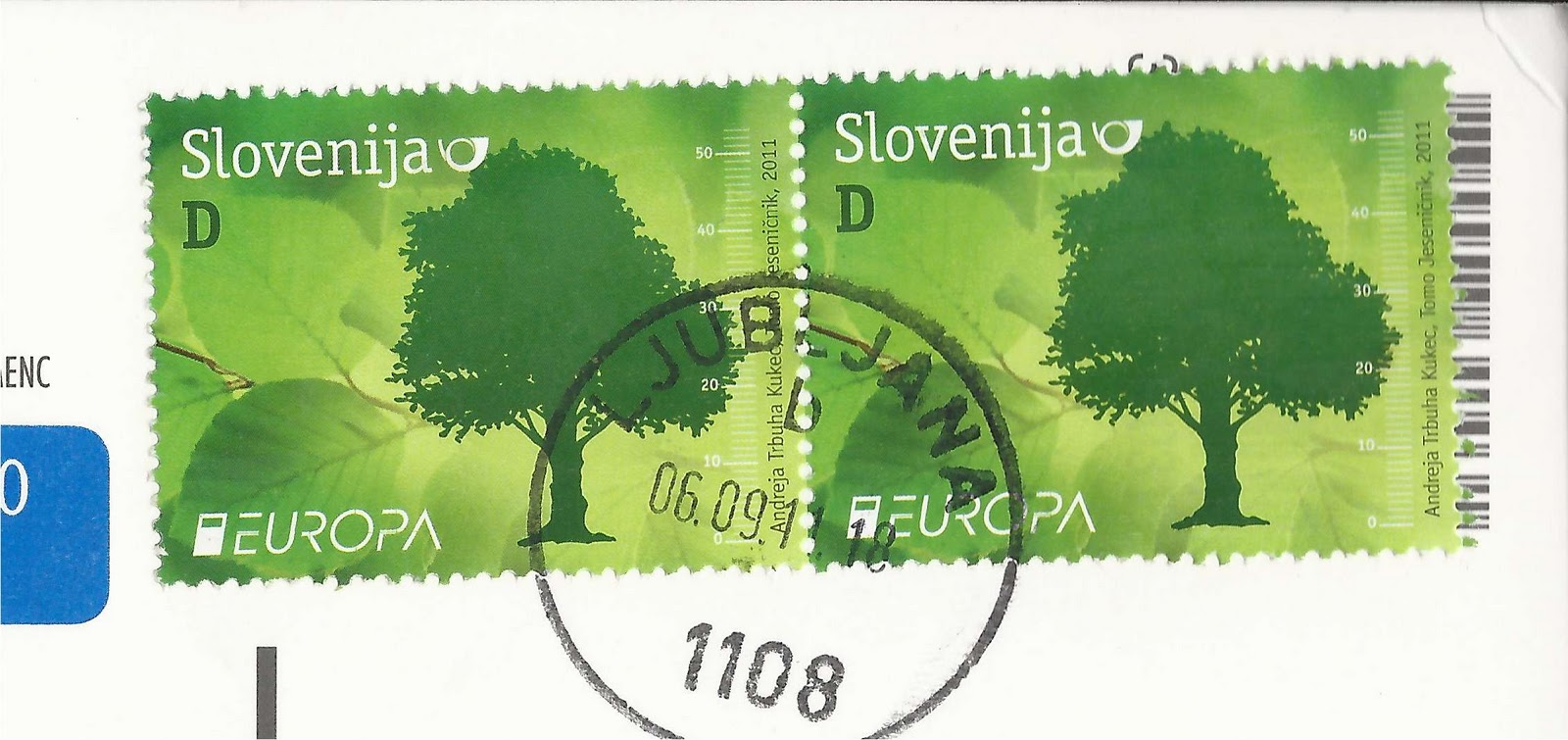
The beech is one of the most common tree species in Slovenia, accounting for a full 30 per cent of the country’s entire tree stock.

Tuesday, August 9, 2011

Ljubljana, Slovenia sent by Mirjam


Postcard
Ljubljana is the capital of Slovenia and its largest city. After World War II, Ljubljana became the capital of the Socialist Republic of Slovenia, part of Communist Yugoslavia, a status it retained until 1991, when Slovenia became independent. Ljubljana remained the capital of Slovenia, which entered the European Union in 2004.

The Ljubljanica is a river in the southern part of Ljubljana.


Stamp
Serratula Lycopifolia. Is it a crossing between Serratula Tinctoria and Centaurea Lycopifolia?  It’s a kind of Daisy.

Flags

Free counters!

Total Pageviews